⚡ Storm damage emergency? Call or text any time — urgent requests are routed to the first available local crew: (541) 286-5247
Want to get ahead of it? See how to storm-proof your Corvallis trees before the wind arrives.
Storm Damage Tree Removal in Corvallis, OR — What to Do After a Major Storm
Storm damage tree removal Corvallis: a step-by-step guide for Benton County homeowners dealing with fallen trees, broken limbs, and storm damage
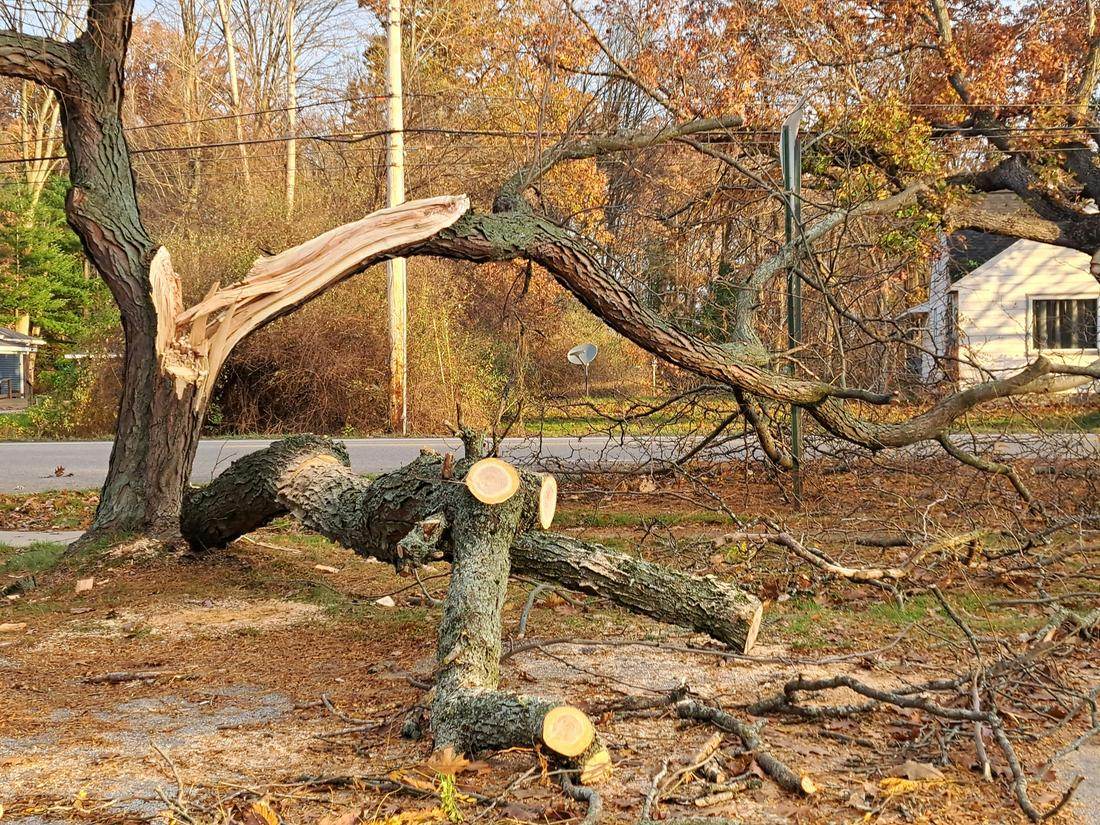
Willamette Valley storms don't give much warning. A winter wind event, an ice storm that bends branches past their limit, or a night of saturated soil followed by gusts — and suddenly you're looking at a 60-foot Douglas fir across your driveway at 6 AM. It happens to Corvallis homeowners every year, and how you respond in the first few hours matters more than most people realize.
This guide walks you through exactly what to do after storm damage — from immediate safety steps to insurance documentation to finding qualified local help fast.
If the tree is on your home, touching power lines, or blocking emergency access: Call 911 first if there's any risk to life. Call Pacific Power at 1-877-508-5088 for downed power lines. Do not approach a tree touching or near electrical lines under any circumstances.
Step 1 — Stay Safe First
Your first instinct after a storm might be to get outside and assess the damage. Resist it. Before you go anywhere near a fallen tree or damaged structure, run through this mental checklist:
- Power lines: Can you see any downed lines near the tree? Even lines that appear intact may be energized. Stay at least 30 feet away from any tree in contact with or near power lines and call Pacific Power immediately.
- Structural damage: If the tree has hit your roof, avoid the affected rooms. A tree on a roof doesn't always cause immediate collapse, but the structure is compromised — don't walk under it.
- "Widow makers": Look up before you walk under any tree that was affected by the storm. Broken branches hanging in the canopy can fall without warning — sometimes hours or days after the storm passes.
- Gas lines: If a tree has damaged your home and you smell gas, get everyone out immediately and call your gas company before doing anything else.
Step 2 — Document Everything Before Cleanup Begins
This step is critical and most homeowners skip it in the rush to get things cleaned up. Before any tree removal work begins — before a single branch is moved — take photos and video of everything.
Walk the entire affected area and document:
- The fallen tree from multiple angles
- Any structural damage to your home, fence, garage, or outbuildings
- The root ball if the tree uprooted — this shows the full scope of the fall
- Any damage to neighboring property
- The general condition of your yard before cleanup
Insurance tip: Your photos and video are your evidence for any insurance claim. Insurers can and do dispute claims when there's no documentation of the pre-cleanup state. Spend 10 minutes documenting before you call anyone else — it could be worth thousands of dollars.
Step 3 — Call Your Insurance Company
Before you call a tree service, call your homeowner's insurance company. Here's why the order matters: if you hire someone and pay out of pocket before filing a claim, your insurer may limit what they'll reimburse. Calling first establishes the claim timeline and lets your adjuster advise you on next steps.
When you call, have ready:
- Your policy number
- Photos and video documentation you just took
- A description of the damage — what fell, what it hit, what's affected
- Whether the situation is an ongoing safety hazard
What Does Oregon Homeowner's Insurance Actually Cover?
Coverage varies by policy, but here are the general rules for most Oregon homeowners:
Usually covered: Tree removal if the tree has fallen on a covered structure (your home, garage, fence). Debris removal up to a certain limit. Emergency protective measures to prevent further damage.
Usually NOT covered: Removal of a tree that fell in your yard without hitting a structure. Removal of trees that were already dead or diseased before the storm. Preventative removal of trees that didn't fall.
If your neighbor's healthy tree falls onto your property due to a storm, your own insurance typically covers the damage to your property — not your neighbor's. Consult your policy or agent for specifics.
Step 4 — Get Emergency Tree Removal Help
Once you've documented the damage and started the insurance process, it's time to get professional help. For emergency situations — a tree on your roof, blocking your driveway, or posing an active safety hazard — same-day response is often possible from local Corvallis tree service crews.
Call for Emergency Help
Contact us at (541) 286-5247. Describe the situation and we'll connect you with an available local crew immediately.
Local Crew Dispatched
We connect you with a vetted, insured Benton County crew. Local means faster arrival — no waiting for out-of-town contractors.
Safe Removal & Cleanup
The crew removes the hazard safely and cleans up debris. You'll get a clear quote before work begins even in emergency situations.
Common Storm Damage Tree Removal Corvallis Scenarios
Scenario 1: Tree Fell in the Yard, Didn't Hit Anything
This is the most common and least urgent scenario. The tree is down but there's no structural damage. You have time to get multiple quotes — this doesn't need to be an emergency call. Standard removal pricing applies, typically $300–$1,500 depending on tree size and access. Your insurance likely won't cover removal in this case unless your policy specifically includes debris removal coverage.
Scenario 2: Tree Fell on Your Home or Garage
This is an emergency. Call your insurance company first, document thoroughly, then get emergency tree removal help. Most homeowner's policies cover removal costs when a tree hits a covered structure. Request that the tree removal crew provide an itemized invoice separating the removal cost from any structural repair work — your insurer will want this distinction.
Scenario 3: Large Branches Hanging in the Canopy
Don't wait on this one. Broken branches suspended in the tree — "widow makers" — are unpredictable and can fall days or weeks after a storm, especially with temperature changes or additional wind. This qualifies as an emergency pruning situation. Have a professional remove them before they fall on their own.
Scenario 4: Tree Leaning After Storm
A tree that has noticeably shifted position after a storm may have compromised roots — even if it's still standing. Have it assessed immediately. A partially uprooted tree can fall without further wind, especially in Willamette Valley's saturated winter soils. Don't wait for the next storm to find out if it's stable.
Scenario 5: Tree Near or Touching Power Lines
Do not attempt any work yourself and do not hire a contractor to work on this without utility coordination. Call Pacific Power at 1-877-508-5088 first. They'll assess whether the lines are de-energized before any crew can safely work near them. Your local tree service professional should handle this coordination — any reputable crew will know the process.
Beware of Storm Chasers
After every major storm in the Willamette Valley, out-of-town contractors show up offering quick, cheap tree removal. Some are legitimate. Many are not. In the aftermath of a storm, when you're stressed and just want the problem gone, it's easy to hire someone you'd never normally use.
No matter how urgent the situation feels, take two minutes to check that anyone you hire has:
- A verifiable Oregon CCB license number
- Proof of liability insurance and workers' compensation
- A local presence or verifiable references in Benton County
An uninsured crew that causes additional damage to your home during removal — or a worker injured on your property — can create a legal and financial nightmare that far exceeds the original storm damage. See our full guide on how to find a trusted tree care professional in Corvallis for the full credential checklist.
Preparing for Future Storms — Before the Next One Hits
The best storm damage plan is a proactive one. Corvallis and Benton County homeowners who schedule regular tree assessments and maintenance are significantly less likely to deal with emergency situations after a storm. A few things worth doing before storm season hits:
- Pre-storm tree assessment: Have a local arborist identify any trees with structural weaknesses, root problems, or disease before storm season. Early identification means planned removal — not emergency removal at premium rates.
- Crown thinning: Reducing canopy density before wind events dramatically lowers the force a tree experiences in high winds. This is especially important for large Douglas firs and bigleaf maples near structures. See our tree trimming services page for more.
- Remove hazard trees proactively: If you have a dead, leaning, or structurally compromised tree near your home, remove it before the storm does it for you — on its own terms, at its own timing.
- Review your insurance policy: Know what's covered before you need it. A quick call to your agent now is much less stressful than a surprise denial mid-claim.
Timing matters: Emergency tree removal after a storm costs 25–50% more than scheduled removal. If you have trees that concern you, removing them proactively is almost always the more cost-effective option. Read our full pricing guide for Corvallis tree removal costs.
Other Tree Care Resources for Corvallis Homeowners
Storm Damage? We Can Help Right Now.
Get connected with a licensed, insured local tree care professional in Corvallis or Benton County. Urgent requests are routed to the first available local crew, subject to availability.
Call Now: (541) 286-5247 Submit a Request Below