How to Find a Trusted Arborist in Corvallis, OR — And What to Ask Before You Hire
A practical guide for Benton County homeowners who want quality tree work done right the first time
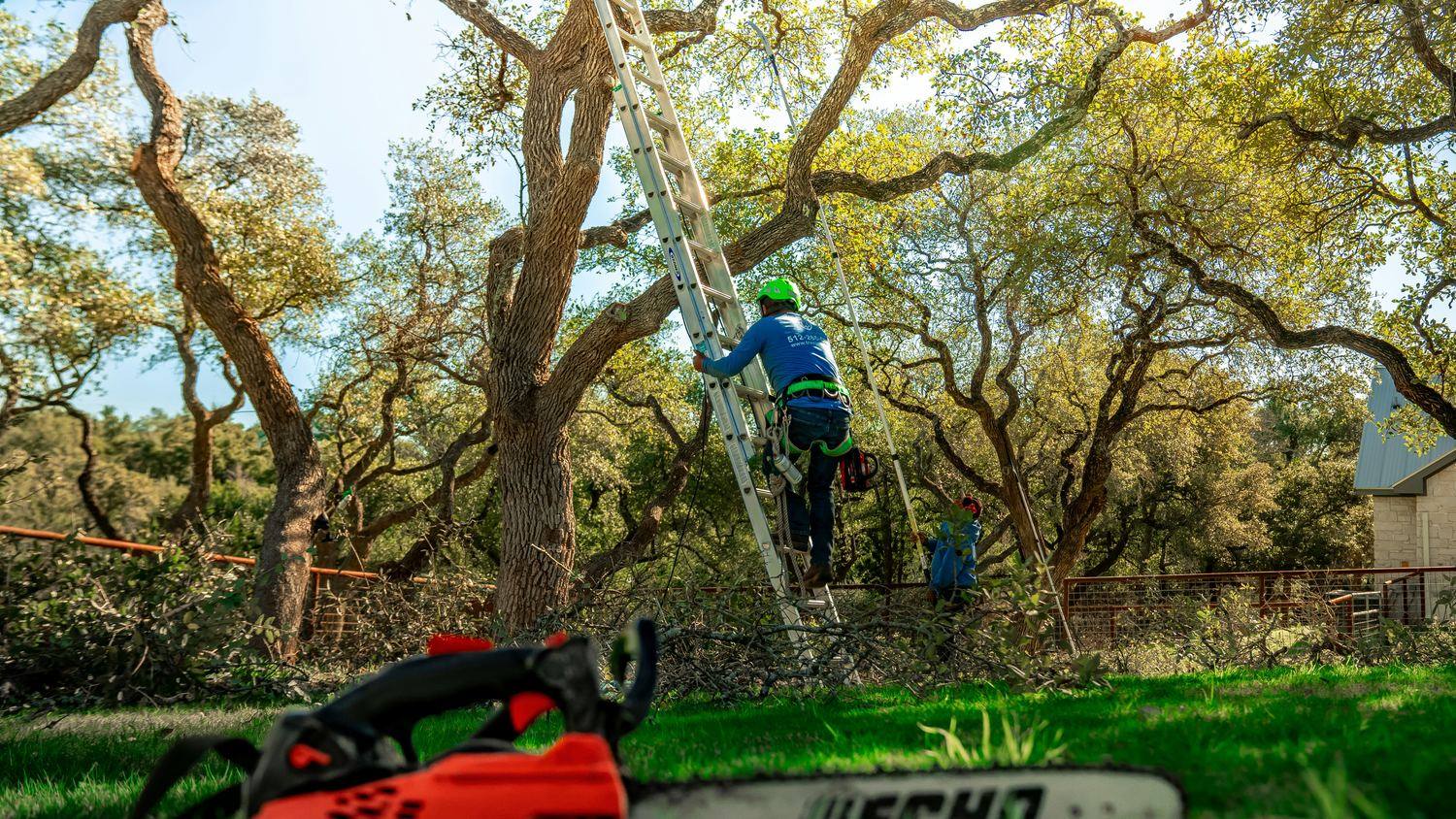
If you've ever watched a crew show up at a neighbor's house, drop a massive tree in two hours, and leave the yard cleaner than they found it — you probably wondered how they found those guys. Finding a genuinely skilled, trustworthy tree care professional in Corvallis isn't difficult if you know what to look for. It's just that most homeowners don't know what questions to ask until after something goes wrong.
This guide will walk you through exactly what a reputable local arborist looks like, what red flags to watch for, and the questions that separate professionals from people who just own a chainsaw.
What Is an Arborist — and Do You Actually Need One?
The word "arborist" gets used loosely in the tree care industry, so it's worth being precise. An ISA Certified Arborist is someone who has passed a comprehensive exam administered by the International Society of Arboriculture and maintains ongoing continuing education. Certification demonstrates a real baseline of knowledge about tree biology, proper pruning techniques, risk assessment, and safe removal practices.
For routine tree removal — a dead tree in an open yard, a stump that needs grinding — you don't necessarily need a certified arborist. You need a licensed, insured professional with solid references and proper equipment. But for complex situations — trees near structures, diseased oaks, large conifers close to power lines, or any situation where the wrong cut could cost you tens of thousands of dollars — an ISA-certified arborist is absolutely worth seeking out.
Quick rule of thumb: For straightforward removal jobs, focus on licensing, insurance, and references. For anything complex, near structures, or involving tree health assessment, prioritize ISA Certified Arborists. The distinction matters.
The Corvallis Tree Care Landscape
Benton County has a healthy number of reputable tree care companies, which is both good news and a source of confusion. You'll encounter everything from one-person operations running a truck and a chainsaw to established companies with cranes, chippers, and ISA-certified staff. All of them will show up in a Google search. Very few of them will be wrong for you specifically — but some will be, and knowing the difference matters.
The Willamette Valley's tree species add another layer of complexity. Douglas firs, bigleaf maples, Oregon white oaks, and western red cedars all have different removal challenges, different optimal pruning windows, and different disease risks. A crew that handles them every day in this specific region is going to perform better than a generalist who travels in from Salem or Portland to pick up work.
Local knowledge isn't just nice to have — it's genuinely consequential, especially for oak trees. Corvallis-area oaks are susceptible to sudden oak death, a disease that can be inadvertently spread through improper pruning at the wrong time of year. A local professional knows to avoid oak pruning in spring. An out-of-town crew may not.
Credentials to Look For
ISA Certification
You can verify any arborist's ISA certification at the International Society of Arboriculture's website. Certified arborists maintain their credentials through continuing education — so the certification is current, not just historical. In Oregon, look for the ISA-PN designation (Pacific Northwest chapter).
Oregon Licensing
In Oregon, tree service companies that perform work on your property generally need to be licensed through the Construction Contractors Board (CCB) or the Landscape Contractors Board (LCB). Ask for their license number and verify it at the Oregon CCB website before signing anything. This takes about 90 seconds and tells you whether the company is actually registered and in good standing.
Liability Insurance and Workers' Compensation
This is non-negotiable. Ask for a certificate of insurance before any work begins — not just a verbal assurance that they're covered. A legitimate company will provide this without hesitation. You want to see both general liability insurance (covering property damage) and workers' compensation (covering crew injuries on your property). If either is missing, don't hire them regardless of how low the quote is.
Real risk: If an uninsured worker is injured on your property, you can be held personally liable. This has happened to homeowners in Oregon. It's not a theoretical risk — it's a real one. Always verify insurance before work begins.
Red Flags That Should Make You Walk Away
The tree care industry has its share of what's commonly called "storm chasers" — crews who show up in force after a major wind or ice event, offering quick work at prices that seem reasonable in the moment. Most are legitimate. Some are not. Here's what to watch for regardless of when someone contacts you:
- They quote a large job over the phone without seeing it. Any experienced tree professional knows that price is determined by factors you can only assess in person — root system, lean direction, proximity to structures, equipment access. A phone quote on a complex job is either a guess or a low-ball to get in the door.
- They ask for full payment upfront. A deposit is reasonable. Full payment before the job is done is a red flag.
- They recommend "topping" a tree. Tree topping — cutting back all the main branches to stubs — is widely condemned by arborists as harmful to tree health and structure. Any professional recommending it for a healthy tree doesn't know what they're doing.
- They can't provide a certificate of insurance on request. Walk away. This isn't negotiable.
- They pressure you to decide immediately. Legitimate companies are busy. They give you time to think. High-pressure tactics to sign today are a sales strategy, not a sign of quality.
- No physical address or business history. A company with no verifiable local presence, no reviews, and no CCB license number is a risk not worth taking.
Questions to Ask Before You Hire
Most homeowners feel awkward asking contractors to verify their credentials. Don't be. Any professional who gets annoyed by these questions is telling you something important about how they do business.
Your Pre-Hire Checklist
- ✓ Are you licensed with the Oregon CCB or LCB? What's your license number?
- ✓ Can you provide a certificate of liability insurance and workers' compensation?
- ✓ Do you have ISA Certified Arborists on staff?
- ✓ How long have you been operating in the Corvallis area?
- ✓ Can you provide two or three local references from similar jobs?
- ✓ What does cleanup include — is debris hauling part of the quote?
- ✓ Is stump grinding included, or is that a separate cost?
- ✓ Do I need a permit for this tree? Will you handle that?
- ✓ What happens if something goes wrong — damage to my property?
- ✓ How do you handle trees near power lines?
Getting Multiple Estimates — and Reading Them Correctly
Three estimates is the standard recommendation, and it's good advice. But the lowest estimate isn't automatically the best choice, and the highest isn't automatically the most thorough. What you're looking for is an estimate that's specific — that accounts for the actual conditions of your tree and property — and comes from a company that answered your credential questions without hesitation.
When comparing estimates, make sure you're comparing the same scope. One crew might include stump grinding; another might not. One might haul away all debris; another might leave wood rounds on-site. Get clarity on what's included before you compare numbers.
How Much Does Tree Work Cost in Corvallis?
Costs vary widely based on tree size, location, species, and the complexity of the removal. As a general guide for Benton County:
- Small trees under 30 feet: $150–$400
- Medium trees 30–60 feet: $400–$900
- Large trees 60–80 feet: $900–$1,500
- Very large trees over 80 feet: $1,500–$3,000+
- Stump grinding: $100–$400 per stump
- Emergency/after-hours service: typically 25–50% premium
For a deeper breakdown by tree species and what drives pricing, see our full Corvallis tree removal cost guide.
A Note on Permits
Most private property tree removals in Corvallis don't require a permit. But street trees — those growing in the planting strip between the sidewalk and the curb — always require city approval before any work. Heritage trees and trees in certain protected zones also have restrictions. Your arborist should flag permit requirements as part of the initial assessment. For more detail, see our guide on tree removal permits in Corvallis.
The Bottom Line
Finding a trustworthy arborist in Corvallis comes down to three things: verified credentials, local experience, and a willingness to answer your questions directly. The Willamette Valley has plenty of qualified professionals who check all three boxes. Take the extra twenty minutes to verify what you're told, get a second estimate, and read the contract before you sign — and you'll almost certainly end up with work you're happy with.
If you'd like to skip the search and get connected with a vetted, insured local tree care professional in Corvallis, Philomath, or Albany — we can do that for free.
📅 Timing matters: Once you've found your arborist, check our season-by-season guide to trimming trees in Corvallis so work gets done at the right time of year.
Other Tree Care Resources for Corvallis Homeowners
Ready to Get Connected With a Local Pro?
We'll match you with a licensed, insured tree care professional in Corvallis or Benton County. Free estimate, no obligation.
Get My Free Estimate Below