Signs Your Tree Needs to Come Down: A Corvallis Homeowner's Guide
Eight warning signs Benton County homeowners should never ignore — from trunk cracks to fungal growth at the base.
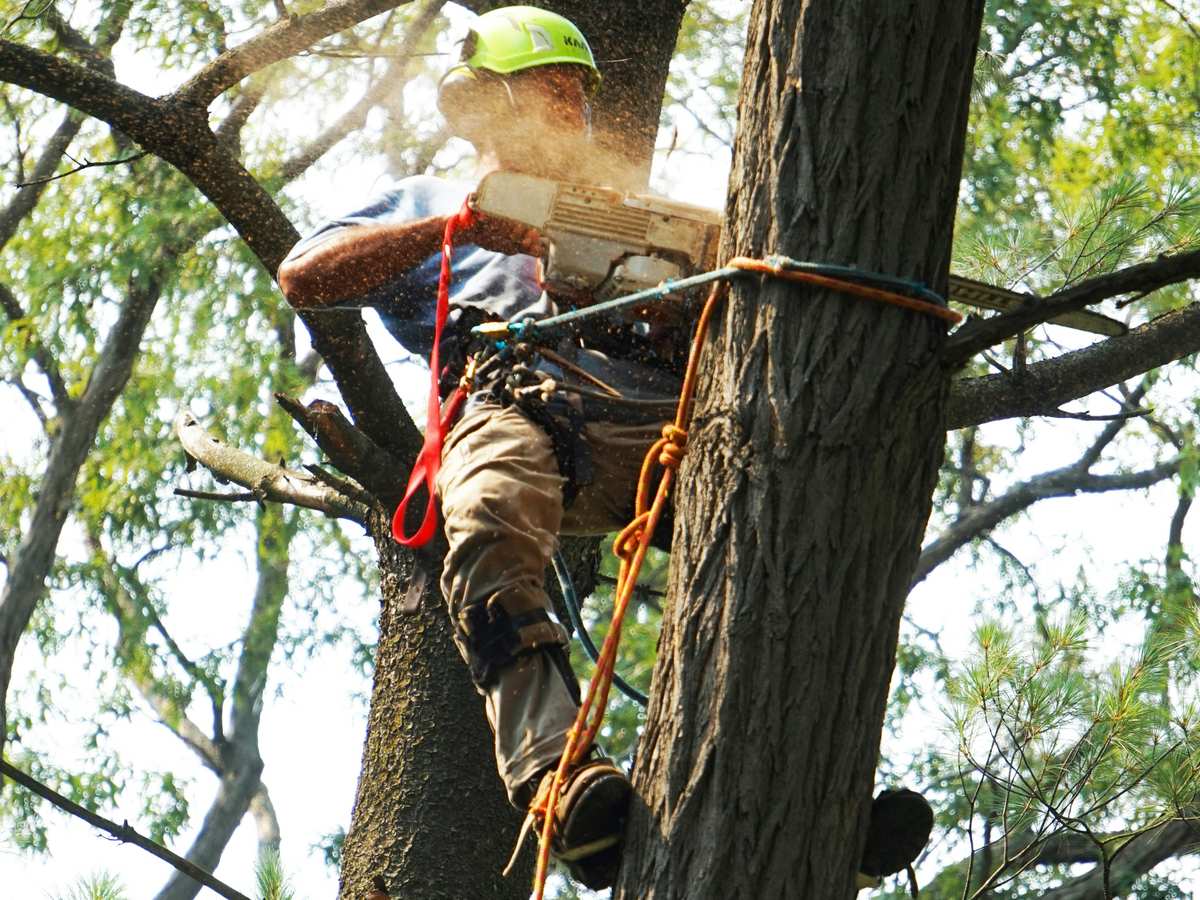
Knowing the signs your tree needs to be removed can prevent a dangerous failure. Most trees in Corvallis live long, healthy lives without anyone thinking twice about them. They shade houses, frame streets, and quietly do their thing for decades. But some trees, at some point, cross a line from "part of the yard" to "actual risk to the property." And the tricky part is that the crossing isn't always obvious until the tree is already on the roof.
Knowing the warning signs is what separates homeowners who catch a problem early — while removal is still straightforward and affordable — from homeowners who end up dealing with a fallen Douglas fir in their living room after the next windstorm. This guide walks through eight specific signs that mean it's time to call a local professional for an assessment. Most of them are visible from the ground. All of them are worth taking seriously.
Why This Matters More in the Willamette Valley
Corvallis trees deal with conditions that amplify structural weakness. Winter rainfall saturates soil for weeks at a time, weakening root anchorage in even healthy trees. Pacific windstorms regularly bring sustained gusts that stress weakened trunks and exposed canopies. Ice and wet-snow loading events compound the problem by adding hundreds of pounds of weight to already-stressed branches.
Add to that the fact that many older Corvallis neighborhoods — especially those near OSU — have mature Douglas firs planted close to homes, driveways, and fences. When those trees fail, they fail hard. A small warning sign on a Doug fir in your front yard carries more weight than the same sign on a small ornamental in the middle of an open lawn. Location matters.
The 8 Signs Your Tree Needs to Be Removed
1. A Major Crack or Split in the Trunk
Visible vertical cracks running down the main trunk — especially cracks that open and close as the tree sways in wind — are one of the clearest warning signs a tree is structurally compromised. The crack doesn't need to be large. A quarter-inch vertical split that extends more than a few feet up the trunk means the internal wood is already failing.
Why it matters: cracked trunks fail suddenly and completely. The tree doesn't tip slowly — it snaps. If the crack is on the side facing a structure, it should be assessed immediately.
2. Fungal Growth at the Base
Conks, mushrooms, and shelf fungus growing on or near the base of a tree are not a cosmetic issue. They're a sign that the internal wood is already decaying, and the visible fungus is just the fruiting body of a much larger infection living inside the trunk and root system.
Why it matters: by the time fungal fruiting bodies are visible, significant structural decay has often already occurred. Armillaria (honey fungus) is particularly common in the Willamette Valley and can hollow out a tree from the inside while the canopy still looks green. A certified arborist can confirm the species and severity — our guide on finding a trusted arborist covers what credentials to look for.
3. Hollow or Soft Spots in the Main Trunk
Tap around the trunk with the back of a hand or a small mallet. A healthy trunk sounds solid. A compromised one sounds hollow — and sometimes has visible soft spots where the bark is slightly sunken or spongy to the touch.
Why it matters: trees can live for years with some internal decay, but the ratio of sound wood to hollow space determines structural integrity. As a general rule, when internal decay exceeds about a third of the trunk diameter, the tree is a candidate for removal. Only a professional assessment can confirm the extent.
4. Dead Branches in the Upper Canopy
Look up. Large dead branches high in the canopy — sometimes called "widow makers" — are a double problem. They indicate overall tree health decline, and they're a direct drop hazard independent of what happens to the rest of the tree.
Why it matters: a single dead branch doesn't necessarily mean the whole tree needs removal. Targeted pruning may solve the problem. But when dead branches make up more than about a quarter of the canopy, the tree is often in terminal decline, and full removal becomes the safer long-term call.
5. A Significant Lean That Wasn't There Before
Established trees lean. Many perfectly healthy trees have leaned the same direction for decades. The warning sign isn't the lean itself — it's a lean that has increased recently, especially after a storm or during an unusually wet period.
Why it matters: a new or increasing lean almost always means something has changed below ground — usually root failure or soil shift. The tree is now unstable in a way it wasn't before. Cracks in the soil on the opposite side of the lean are a strong corroborating sign. This is one to act on quickly.
6. Exposed or Heaving Roots
Healthy trees have root flares that gradually meet the ground. Trees in trouble show roots that are visibly lifting out of the soil, or soil that has cracked and domed up near the base of the trunk — especially on the side opposite any lean.
Why it matters: root heave means the root plate is rotating and the tree is in the early stages of uprooting. Saturated Willamette Valley soil in winter accelerates this dramatically. A tree with heaving roots is a fall-during-the-next-storm tree, not a "let's keep an eye on it" tree.
7. Loss of Bark or Large Bark Cracks
Bark loss in patches, large vertical cracks in the bark, or sections where the bark has peeled away entirely expose the underlying wood to pests, disease, and decay. Some bark shedding is normal for certain species — eucalyptus, sycamore, madrone. But on Douglas fir, oak, or maple, sudden bark loss is a red flag.
Why it matters: bark is the tree's protective skin. When it fails, the interior wood is vulnerable, and the damage typically accelerates year over year. Trees with extensive bark damage rarely recover and usually continue declining until removal becomes necessary.
8. Recent Storm Damage to the Crown or Trunk
Trees that survived a storm with visible damage — broken tops, snapped major limbs, or partial trunk failure — are often more compromised than they appear. The wounds open pathways for decay, the remaining structure is stressed, and the next storm will test whatever is left.
Why it matters: storm-damaged trees sometimes stabilize and live for years. Others decline rapidly. The difference is usually invisible from the ground. A post-storm assessment by a professional is almost always worth the twenty minutes — especially before summer heat stress hits. Our storm damage guide covers what to document and how insurance typically handles these cases.
When It's a Judgment Call
Some of these signs are clear-cut. A tree with a vertical trunk crack, root heave, and a fresh lean toward a house is obvious — it needs to come down. Others are more nuanced. A few dead branches in the upper canopy of an otherwise healthy oak might be solved with targeted pruning. Fungal growth on a mature tree might reflect decades-old damage that has already stabilized.
This is where having a certified arborist walk the property matters. A good arborist will give an honest recommendation, which sometimes means "this tree is fine, leave it alone" or "a crown reduction will buy you ten more years." Paying for removal that wasn't actually necessary is a common Corvallis-homeowner mistake — and it's exactly the kind of thing a reputable local contractor will steer you away from.
A practical rule of thumb: one warning sign means schedule an assessment when it's convenient. Two or more signs — especially if any of them involve root instability, trunk integrity, or a lean toward a structure — means schedule an assessment this week.
What Happens Next
If something in this list sounds familiar, the realistic options are:
Watch and wait — appropriate only when the signs are minor, the tree is far from any structure, and no recent storm has tested it. If the tree is near a house, a driveway, or a fence, watch-and-wait is almost never the right call.
Get a professional assessment — for most situations, this is the right first step. A local Corvallis tree contractor will walk the property, look at each tree individually, and give an honest assessment. These assessments are almost always free, take twenty to thirty minutes, and commit you to nothing. If the tree is fine, you leave with peace of mind. If it isn't, you leave with a written quote and a clear plan.
Treat it as an emergency — if a tree is actively leaning toward a structure, has fallen partially, is hung up in another tree, or is in contact with power lines, it's not a "get an assessment" situation. It's a call-right-now situation. Emergency tree service is available for exactly these cases.
The average Corvallis tree removal runs between $300 and $2,000 depending on size, location, and access — the full 2026 pricing guide breaks down what actually drives those numbers. Catching a problem tree early, before it becomes an emergency, almost always means a lower bill and less stress.
Frequently Asked Questions
Is it ever safe to leave a damaged tree standing?
Sometimes. A tree with minor cosmetic damage, located far from any structure or walkway, can often be left alone — especially if the species is known to compartmentalize wounds well. The answer depends heavily on species, severity, and location, which is why a professional assessment is more reliable than a general rule.
How often should I inspect the trees on my property?
A walk-around after any significant windstorm is the most important inspection a Corvallis homeowner can do. Beyond that, a slower, more careful look in early spring (when damage from winter is visible but before leaves obscure the canopy) and again in late fall (after leaf drop, before storm season) is enough for most properties.
If a neighbor's tree shows these signs, what are my options?
Oregon law generally gives property owners the right to trim branches and roots encroaching onto their property at the boundary line, at their own expense. For a tree that is structurally compromised and threatens your property, the right move is usually a polite conversation with the neighbor first, often backed up by a written assessment from a certified arborist. If that fails, Oregon has legal remedies — but they're a last resort.
Does homeowner's insurance cover preventive removal?
Generally no. Most homeowner's policies cover tree removal only after a tree has caused damage to a covered structure during a covered event (a storm, for example). Preventive removal of a healthy or declining tree is almost always out of pocket. Policies vary — worth a quick call to your insurer to confirm.
Think One of Your Trees Might Be a Problem?
A free on-site assessment from a local Benton County contractor is the easiest first step. Takes twenty minutes, costs nothing, commits you to nothing.
Get My Free Estimate